

Planning for Weather at an Outdoor Mountain Wedding in Western North Carolina
September 30, 2026
Ask anyone who has spent real time in these mountains and they will tell you the same thing: the mountain wedding weather here has a personality. Morning fog that burns off by ten. An afternoon shower that moves through in twenty minutes and leaves the ridge lines looking sharper than they did an hour before. An evening that drops twenty degrees once the sun slips behind the ridge. None of it is a flaw in the setting. It is the setting.
We have been planning wedding weekends in Highlands, Cashiers, Asheville, and across Western North Carolina since 2012. Across fourteen years and more than 350 celebrations, we have worked through nearly every version of weather these mountains can produce. What that experience has taught us is simple. Weather is not the enemy of an outdoor mountain wedding. A plan that never accounted for it is. That is why our planning starts months ahead, and why we keep a close eye on the National Weather Service forecast for the mountains in the days leading up to every celebration.
This post covers what makes mountain weather different from the forecast your guests will check at home, what each season realistically brings, and what a weather plan actually involves when it is built with care.
Mountain Weather Guide
Why Mountain Weather Is Different
Elevation changes everything. Highlands sits above 4,000 feet, Cashiers sits near 3,500, and Asheville sits closer to 2,100, which means conditions across the region can differ meaningfully on the same afternoon. A forecast pulled for the nearest city often says very little about what a specific ridgeline will do at four in the afternoon.
Microclimates are real here. Storms build against the slopes of the Blue Ridge, rain can fall on one side of a mountain while the other stays dry, and fog settles into the coves on mornings when the ridge tops are clear. This is part of why local experience matters so much in this region. Reading a radar map is easy. Knowing how weather actually behaves at a particular venue, at a particular time of day, in a particular season, comes only from having planned celebrations there year after year.
Planning with the Mountains
What Each Season Realistically Brings
Spring, late March through May. Dogwoods, wildflowers, and mild days make spring a beautiful season on the plateau. Afternoon showers are common, particularly in April and May, and evenings cool quickly once the sun is down. Spring plans should assume a covered option and clear layering guidance for guests.
Summer, June through August. Summers at elevation run ten to fifteen degrees cooler than the valleys below, which is a significant part of why couples choose these mountains in the first place. The pattern to plan around is the late afternoon thunderstorm, which tends to build, move through, and clear. Ceremony timing, cocktail hour placement, and a covered contingency handle most of what summer offers.
Fall, September and October. Fall is the most stable stretch of the year and the most requested. Crisp air, lower humidity, and October color that draws people from across the country. Evenings turn cold quickly at elevation, so heaters, wraps, and a well-timed move under cover late in the evening keep guests comfortable through the last dance.
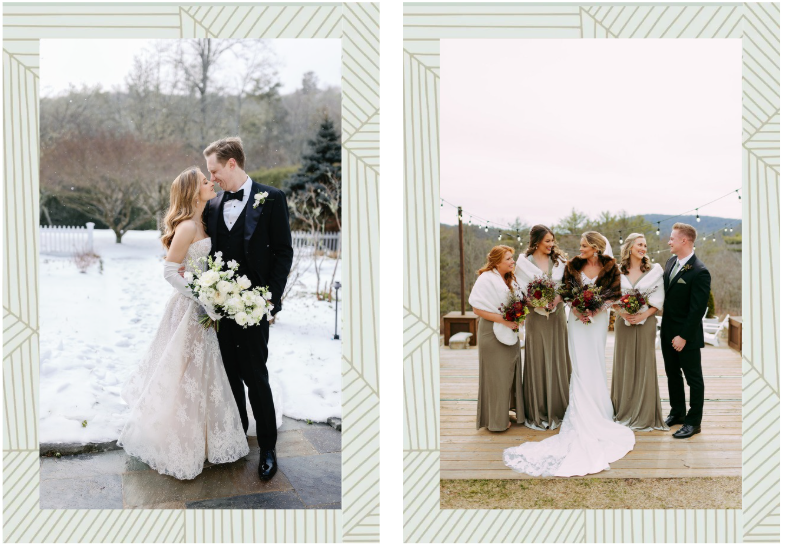
Winter, November through March. Winter celebrations here are intimate and atmospheric, with firelight, early dusk, and occasionally snow. The planning considerations are real: shorter daylight hours, the possibility of ice on mountain roads, and vendor travel that needs more margin. Handled well, winter is one of the most distinctive seasons for a celebration in this region.
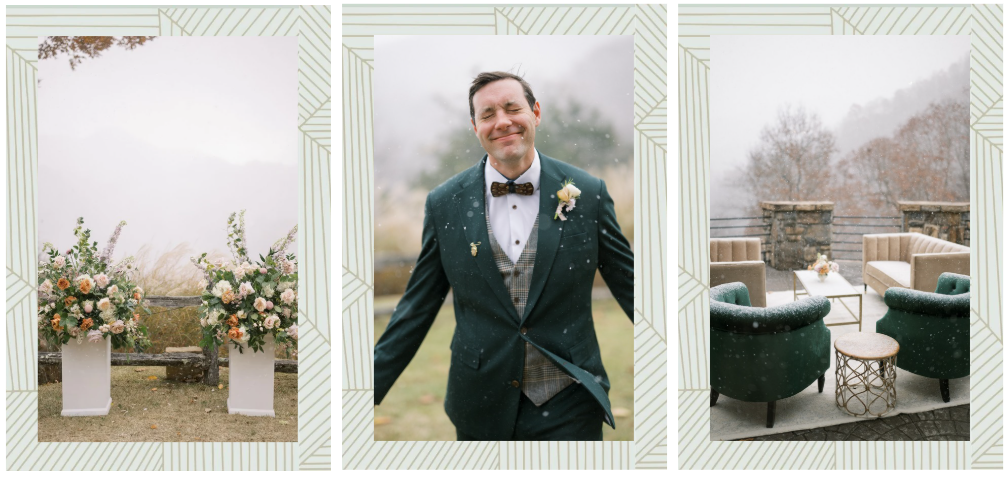
There was no snow in the forecast for one of our November weddings. No snow fell the day before, and none fell the day after. On the wedding day itself, the mountains produced a full blizzard, arriving and departing on a schedule that seemed designed entirely around the ceremony.
The response looked like every good weather plan does: calm and ahead of the moment. The venue prepared and salted the road up the property, and guests and vendors were given a clear picture of the conditions early enough to plan their travel around them. Everyone arrived safely, settled in, and the day carried on exactly as intended.
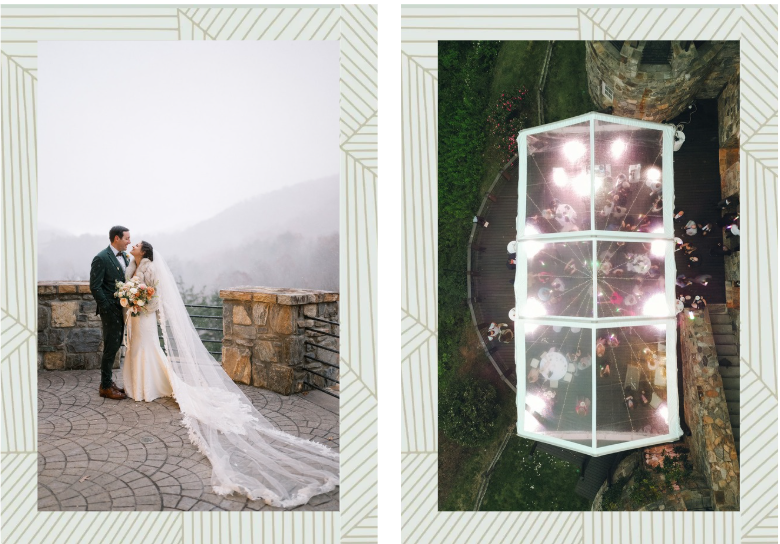
If a surprise blizzard was going to find anyone, this bride joked, it would find her, a woman who has never once been accused of loving cold weather. She met the day exactly the way she’d met the whole planning process: completely chill. Her two golden retrievers kept her warm while she got ready. She walked down the aisle in a beautiful fur coat that looked less like a contingency and more like it had been the plan all along. And she danced the night away at Castle Ladyhawke, high above the Blue Ridge.
That day is yet another reason why we plan the way we do. A weather plan built only around the forecast protects you from the weather everyone saw coming. A weather plan built around the mountains themselves protects you from the day the forecast is simply wrong.
Planning with Confidence
What a Weather Plan Actually Involves
A weather contingency is not simply a backup room. It is a full rethinking of the event flow, designed with the same care as the original plan and communicated clearly to guests, vendors, and families at the same time. In practice, that includes:
A decision timeline. Every plan needs a clear answer to when the call gets made, who makes it, and what information informs it.
Design continuity. If the celebration moves under cover or indoors, the florals, lighting, and atmosphere should move with it. A backup plan should feel like a second version of the same wedding, not a lesser one.
Tent and structure realities. Tents have reserve deadlines, and decisions about sidewalls, flooring, and heat have to happen well before the forecast is certain. Building those decision points into the planning calendar is what keeps options open.
Guest comfort in the margins. Umbrellas staged before the first drop falls. Heaters positioned before the temperature drops. Wraps, fans, and covered walkways where the season calls for them.
A communication order. When plans shift, guests, vendors, and family need to hear it clearly and in the right sequence, so no one is left guessing.
The Right Team Matters
How Vendors Fit Into the Plan
Weather planning extends to every partner working the weekend. Photographers who know how mountain light shifts before and after a storm. Florists who select blooms and mechanics that hold up outdoors at elevation. Caterers who understand what a change in load-in access means when rain arrives during setup. Our role is to make sure every vendor knows the contingency plan as thoroughly as the primary one, so a shift in weather never becomes a scramble behind the scenes.
Lessons from the Mountains
What This Looks Like in Practice
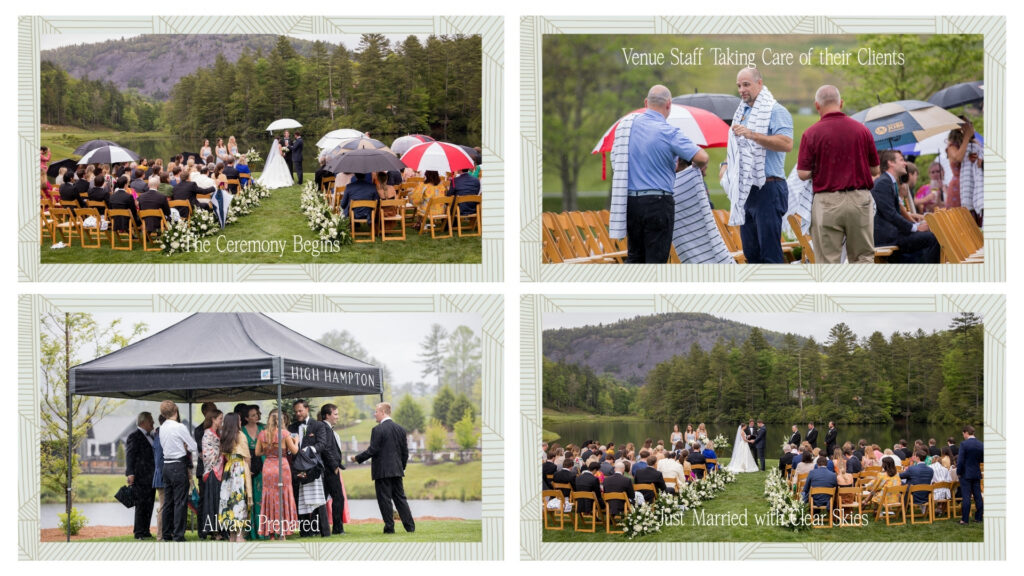
At Caitlin and Kip’s wedding at Castle Ladyhawke, a brief sprinkle moved through during an outdoor ceremony they’d prioritized from the start, and because the chairs had been chosen to withstand weather at elevation and staff were ready to respond, the ceremony continued outside without disruption, a weekend we cover more fully in our post on mountain wedding guest experience.
Some weddings carry more meaning in their ground than any venue could offer. One of our brides was married at the summer camp she grew up attending, with a tented reception in the field beside the brewery on the property her family built. The celebration was the land’s last hurrah, one final gathering before the family said goodbye to it, which made the day mean even more.
What no one knew was that the field had been graded years earlier for a skating rink that never came to be. However thoroughly a property is walked, mapped, and planned, the mountains hold a few secrets that only reveal themselves under the rarest conditions, and that day brought exactly those conditions. Rain came down harder than these mountains usually deliver, water pooled across the reception field, and tables, layout, and flow were reworked in real time while the vendor team moved as one. It also gave us a whole new way of reading a property, and to this day it shapes how closely we study the grounds, the grading, and the smallest details when we build a weather contingency for a ceremony or reception.
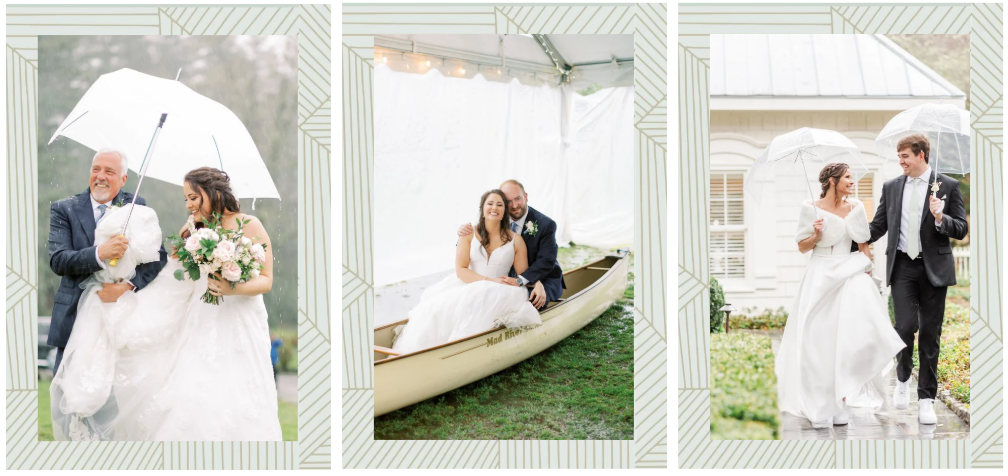
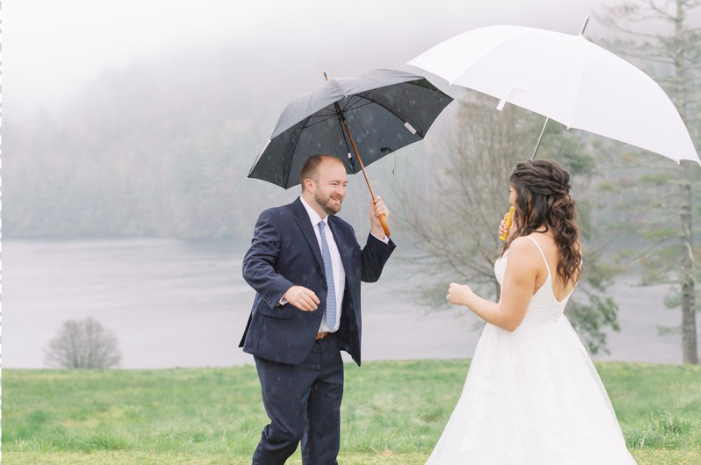
At the camp, the tent backup would have handled any ordinary mountain rain. This was not ordinary rain. It blew sideways at exactly the hour of the ceremony, so instead of a processional, the wedding party made a joyful dash under umbrellas, and the couple was married with the storm doing its worst just beyond the tent. It changed nothing that mattered. They were over the moon. They took every reworked detail in stride, laughed their way through the photos, and even posed in the canoe they’d brought to ice down the drinks. And then the mountains offered the ending only they could write: the moment the rain stopped, the water receded as if it had never been there, and the guests filled the dance floor as if nothing had ever happened.
Not every surprise is one you have to plan around. One of our winter wedding couples wanted snow on the ground and snow in their photographs, enough that we arranged for a vendor to make snow at the venue for the occasion. But snowmaking depends on the temperature cooperating, and in the days before the wedding it became clear the air simply wasn’t going to be cold enough. We canceled the snow-maker. Then the morning of the wedding, with nothing in the forecast to suggest it, Grace woke to flurries and a dusting across the grounds that lasted well into her pictures. The day she’d hoped to engineer arrived on its own. It’s one of the clearest reminders we’ve had that for all the planning, we are never fully in control of the day, only of how ready we are to meet it.
And in these rare situations that move well beyond anyone’s original plan, experience matters most. We have planned through an ice storm that required relocating vendors and guests after nearby hotels lost power, and we supported clients through the aftermath of Hurricane Helene, monitoring road closures, flight cancellations, and supply availability while keeping guests, families, and vendors informed. Neither situation represents what mountain wedding planning typically involves. Both are honest illustrations of what it means to have a experienced and dedicated team beside you when circumstances change.
Keeping Guests Comfortable
Talking to Guests About Weather
Guests who know what to expect arrive relaxed. The wedding website should tell them how to layer for an evening that cools quickly, what footwear the terrain calls for, and how the schedule flows if plans shift. Our guest experience post covers weekend communication in full, but the short version is this: clear guidance before the weekend means the couple spends the celebration present, not answering questions.
The Beauty of the Mountains
The Weather Is Part of the Story
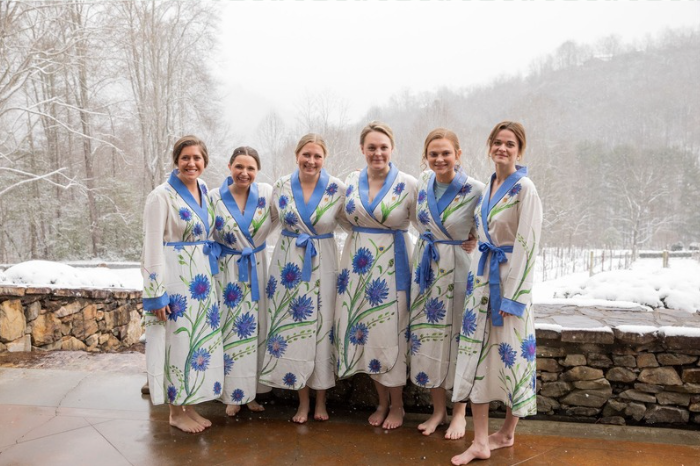
After fourteen years in these mountains, we can say this with confidence: some of the most memorable moments we have witnessed happened because of the weather, not in spite of it. Mist rolling across a ridgeline during cocktail hour. The first cold snap of October arriving just as guests gathered around the fire. Snow falling past castle windows on a day no forecast predicted. A dance floor that filled the moment the rain let go of the mountain.
The mountains will always have their own character. Our job is to plan so thoroughly that their character becomes part of your celebration rather than a complication within it.
If you are planning an outdoor wedding in Highlands, Cashiers, Asheville, or anywhere in the Blue Ridge, we would welcome the conversation.
Mountain Wedding Weather Planning
The Weather Is
Part Of The Story.
Weather is not the enemy of an outdoor mountain wedding. A plan that never accounted for it is. Here’s how we think through seasons, contingencies, and the details that keep a celebration in Highlands, Cashiers, Asheville, and across Western North Carolina feeling seamless no matter what the sky decides to do.
Weddings guided across Western North Carolina, the Blue Ridge Mountains, the Smoky Mountains, and select Southeast destinations.
Still have questions?
Schedule a consultation



Start planning your
dream destination wedding
we live, love, and plan in the mountains so you don't have to
get in touch